
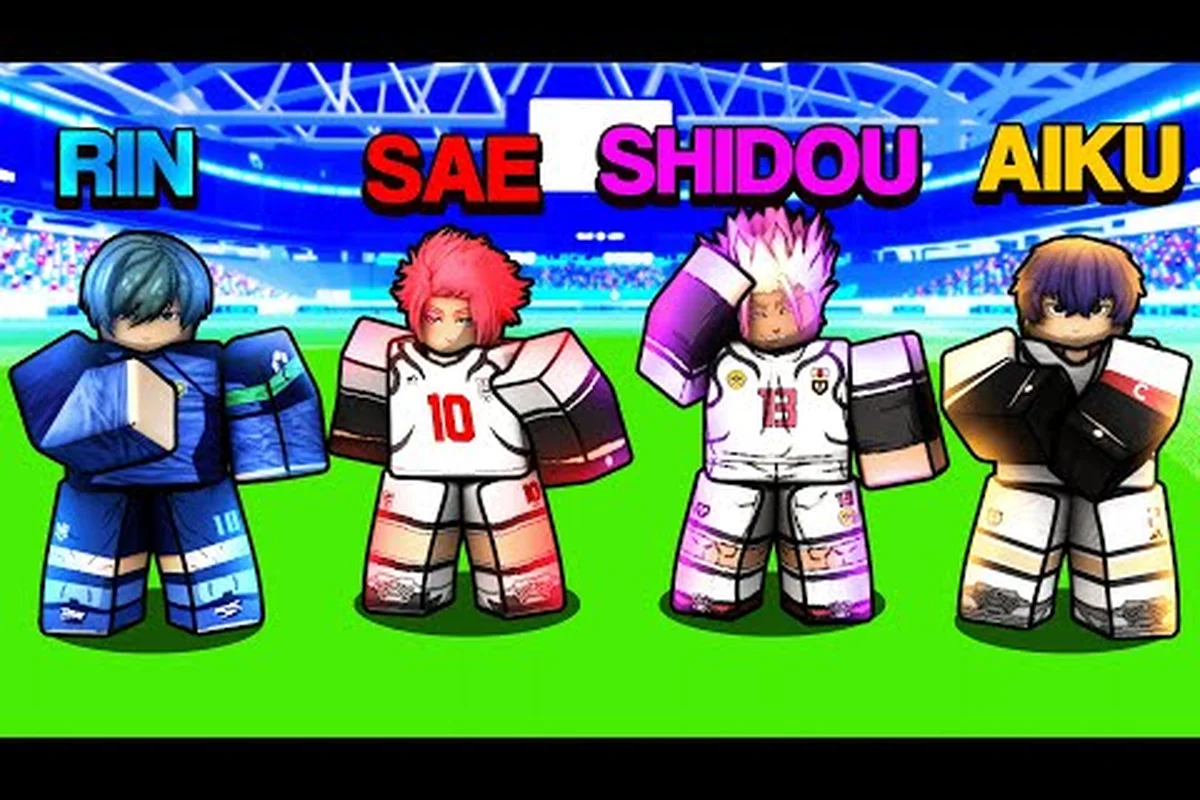
A Blue Lock: Rivals awakening tier list matters because Awakening can turn a good possession into a decisive scoring chance. This ranking compares the best Isagi, Bachira, Rin, Sae, and Shidou upgrades by immediate impact, setup value, and match consistency.
Awakening Tier List and Ranking Method
The Blue Lock: Rivals awakening tier list below ranks Styles by decision value, not by animation spectacle or raw character popularity. A top-tier Awakening is useful when it creates a clear scoring option, removes a defensive response, or gives a teammate time and space that the opposing team cannot recover.
Blue Lock: Rivals is a fan-made 5v5 Roblox football experience. Its official Blue Lock: Rivals Roblox page identifies it as an unofficial tribute, while also confirming that Style selection determines the abilities available during a match. Players commit to a Style before queueing, so Awakening strength must be evaluated as part of a larger build rather than as an isolated upgrade.
| Tier | Styles | Main ranking reason | Best match use |
|---|---|---|---|
| S | Isagi, Bachira | Strong combination of direct threat and attacking freedom | Controlling dangerous transitions |
| A | Rin, Sae, Shidou | Distinct routes to impact with reliable matchup value | Finishing or creating the decisive chance |
| B | Chigiri, Nagi, Barou | Effective bursts when the team reaches favorable positions | Exploiting turnovers and set-piece-style moments |
| C | Kaiser, Loki, Lavinho, Snuffy, Zantetsu, Yukimiya | Valuable but more dependent on buildup or role fit | Supporting a clearer team plan |
| Specialist | Aiku, Gagamaru | Goalkeeper-oriented value outside the standard attacker ranking | Protecting a narrow lead |
Exact Awakening damage, activation timing, cooldowns, prices, and drop rates are not documented in the supplied game materials. Rankings therefore use match impact, possession value, versatility, and consistency as practical decision criteria. Verify all numerical effects and current balance inside the game.
How immediate and setup bursts compare
The strongest Awakening is not automatically the one that creates the most spectacular personal highlight. Some Styles finish attacks directly, while others improve a teammate’s route, control the ball in a dangerous area, or stabilize a possession long enough for a chance to develop.
| Burst type | What it solves | Strongest candidates | Main risk |
|---|---|---|---|
| Immediate finish | Breaks a compact defensive shape | Bachira, Rin, Shidou | Poor timing leaves the burst unused |
| Shot amplification | Rewards an established scoring position | Kaiser, Barou, Nagi | Depends on receiving a quality touch |
| Setup and vision | Creates an option before the final shot | Sae, Isagi, Snuffy | Teammate may not exploit the opening |
| Control and acceleration | Turns transition play into a clear threat | Bachira, Chigiri, Yukimiya | Requires space to operate |
Why the S tier leads the ranking
Isagi and Bachira reach S because their Awakening value can reshape an entire possession. Isagi offers stronger team-oriented attacking awareness, while Bachira creates uncertainty through close control and improvisation. Their profiles can produce different kinds of decision advantage, which matters more than a universal “best upgrade” label.
The Blue Lock: Rivals awakening guide explains how Awakening differs from Flow and outlines the general activation system. In practical terms, Flow is a temporary in-match state built through involvement, while Awakening is a limited burst attached to a Style. Holding or delaying that burst can therefore be more valuable than using it during ordinary buildup.
S-Tier Awakenings: Isagi and Bachira
Isagi occupies the top of the Blue Lock: Rivals awakening tier list because his upgraded attacking profile can influence both the final touch and the positioning of nearby teammates. His value is strongest when the team already has a credible route into the penalty area and Isagi can arrive where the ball is likely to be next.
Isagi Awakening
The blue lock rivals isagi awakening earns S-tier status through positional value. Space-reading attackers can raise the quality of every final action, yet Isagi’s Awakening is most valuable when used after teammates draw defenders toward the ball. The payoff is a chance created through movement and timing rather than raw shot volume.
| Isagi evaluation factor | S-tier assessment | Practical reason |
|---|---|---|
| Team interaction | Excellent | Can reward coordinated runs and passes |
| Direct finishing | High when well positioned | Better used in a dangerous area than during buildup |
| Setup potential | Excellent | His presence can change a teammate’s lane |
| Consistency | High with patience | Waiting for the right attacking moment matters |
Isagi also benefits from players who understand his movement. When the attack is crowded, he may be better used as the organizer of a decisive sequence than as the first player to shoot. The ego-state guide adds useful context on how temporary enhanced states and Awakening differ, which can prevent the two systems from being confused.
Bachira Awakening
The blue lock rivals bachira awakening earns S-tier status through unpredictability. Bachira’s dribble-first approach makes defensive commitment difficult, so an empowered close-control or attacking burst can turn an apparently routine reception into a route toward goal. That unpredictability is especially valuable against a team that has learned to protect the middle.
| Bachira evaluation factor | S-tier assessment | Practical reason |
|---|---|---|
| Ball control | Excellent | Keeps close possessions from becoming easy interceptions |
| Attacking freedom | Excellent | Rewards players who improvise under pressure |
| Team setup | Good | Can create separation without requiring a precise pass |
| Consistency | High in transition | Best when the dribbler has room to change direction |
Bachira’s Awakening should not be treated as an instruction to keep the ball indefinitely. Holding it can still drag the attack backward if the dribble has no forward destination. The correct decision is to activate the burst when a defender has reacted, then move toward either the scoring lane or a teammate’s running route.
Both Isagi and Bachira lead the ranking because they remain valuable in different structures. Isagi excels when the team can exploit coordinated movement, while Bachira creates value through individual freedom. They do not need identical upgrades or identical possession patterns to be S-tier.
A-Tier Awakenings: Rin, Sae, and Shidou
Rin, Sae, and Shidou form the most competitive portion of the Blue Lock: Rivals awakening tier list. Each has a clear attacking identity, but the ideal trigger differs: Rin benefits from a complete forward picture, Sae from space that a teammate can exploit, and Shidou from a direct route to finishing.
Rin Awakening
The blue lock rivals rin awakening is an all-round attacking burst. Rin’s profile is associated with a complete forward contribution rather than one narrow mechanic, giving the upgrade strong relevance across possession phases. His S-tier claim would require stronger consistency than the community evidence currently supports, so A-tier is the more defensible placement.
| Rin use case | Awakening value | Reason |
|---|---|---|
| Central attacking position | Very high | Rewards his all-round forward threat |
| Wing role | Moderate to high | Depends on teammates supplying a crossing route |
| Counterattack | High | Converts transition space into a direct finish |
| Static possession | High but variable | The team must still create a quality shooting angle |
Rin should awaken when the defensive shape is already under pressure, but his activation timing depends on preserving his all-round attacking value rather than forcing an early burst. In a central attacking position, the best opportunity often comes when a counterattack creates transition space and Rin can convert it into a direct finish; activating before the defense is stretched may allow the opposition to recover and close the decisive passing lane. When the team struggles to progress through the middle, patience is especially important: a wider buildup that supplies a crossing route can turn Rin’s awakening into a broader attacking contribution, while static possession still requires a quality shooting angle.
Sae Awakening
The blue lock rivals sae awakening ranks in A-tier because of its assist and vision potential. Sae is particularly useful in build-up sequences where one accurate release can defeat a compact defensive block. That makes the Awakening a setup burst, and setup bursts can be more valuable than extra finishing power when teammates are positioned well.
| Sae evaluation factor | A-tier assessment | Practical reason |
|---|---|---|
| Pass accuracy ceiling | Excellent | Can improve the quality of a decisive release |
| Cross-field options | High | Useful when the defense is pinned to one side |
| Individual scoring | Moderate | Less reliable than dedicated finishers |
| Team dependency | Noticeable | A teammate must occupy the attacking space |
Because Sae was reworked during the 2026 cycle, current community opinion should be treated as dated rather than permanent. Players should compare how the current version feels in practice and avoid assuming older clips still represent the same upgrade. The broader Flow guide explains how sustained involvement can sharpen control and movement, giving Sae additional value when the team builds a prolonged attack.
Shidou Awakening
The blue lock rivals shidou awakening belongs in A-tier because of its direct finishing power. Shidou’s explosive profile is built around arriving in scoring areas and converting them quickly. His upgrade can therefore become decisive during counterattacks or when a teammate delivers the ball beyond the first defensive line.
| Shidou use case | Awakening value | Decision |
|---|---|---|
| Direct transition | Excellent | Use during the route toward goal |
| Cross received in stride | Very high | Rewards timing and close-range finishing |
| Dribble through traffic | High but risky | A failed route wastes the burst |
| Deep defending position | Low | Awakening does not solve poor positioning |
Shidou falls just outside S-tier because his opportunities depend heavily on the ball reaching him in a dangerous area. That dependency does not make the Awakening weak; it makes ball acquisition the key companion skill. A player who repeatedly controls the second ball and attacks open lanes will experience Shidou much more effectively than one who waits far from goal.
B-Tier Awakenings: Chigiri, Nagi, Barou, and the Flexible Middle
Chigiri, Nagi, and Barou form the B-tier because each can deliver a strong burst but needs a more specific team condition. Chigiri benefits from loose balls and open lanes, Nagi from controlled possession and aerial situations, and Barou from a direct path to the shooting zone.
Chigiri Awakening
Chigiri’s Awakening offers exceptional value when possession breaks in the opponent’s half. His speed and pursuit of loose balls create an immediate counterattack route, but the upgrade becomes less reliable when play remains congested. The Kaiser, Loki, Lavinho, and other Style guide provides a broader comparison for speed-oriented and technical attackers.
| Match state | Chigiri Awakening value | Reason |
|---|---|---|
| Loose ball in transition | Very high | He can reach space before the defense resets |
| Controlled buildup | Moderate | Speed has limited value without forward space |
| Defensive recovery | Variable | Depends on the exact route to the ball |
| Breakaway | Very high | Makes an existing separation immediately dangerous |
Chigiri is best treated as a lane winner. Awakening after he has already crossed the defensive line preserves the effect; awakening during a stationary buildup may waste it. His ranking is therefore lower than Bachira’s because Bachira can manufacture uncertainty in tighter areas, whereas Chigiri thrives when space already exists.
Nagi Awakening
Nagi’s Awakening rewards first-touch control and finishing. His value peaks when a pass arrives in a useful location and he can settle the ball without losing the attacking rhythm. A controlled first touch can turn a difficult reception into a straightforward shot opportunity.
| Nagi factor | B-tier assessment | Reason |
|---|---|---|
| First-touch security | Excellent | Supports clean possession in dangerous areas |
| Aerial finishing | High | Fits his association with controlled aerial play |
| Open-field dribbling | Moderate | Not the clearest strength of his profile |
| Setup value | Moderate | More dependent on individual execution |
Nagi should not awaken merely because a pass is coming. The better trigger is the moment he can control the ball with a viable next action available. If the defense closes the shooting lane before he settles it, the upgrade does not automatically create a better result.
Barou Awakening
Barou’s Awakening emphasizes power and direct shooting. It becomes strongest after he reaches a position where the goalkeeper must commit and the route to goal is clear. Barou can be devastating in that scenario, yet a poor angle or crowded buildup reduces the consistency of the burst.
| Barou scenario | Result value | Recommended approach |
|---|---|---|
| Clear shooting lane | Excellent | Activate and commit to the finish |
| One defender blocking the route | High | Use power to create separation |
| Ball at his feet in a crowd | Moderate | Continue working before awakening |
| Long-range attempt | Uncertain | Depends on the current in-game effect |
The B-tier label reflects a strong ceiling rather than low value. Barou, Chigiri, and Nagi can dominate when their Awakening conditions are already favorable, but each needs more consistent activation than the tier leaders: Barou requires a clear shooting lane, Chigiri benefits from space to accelerate, and Nagi must position himself inside the box for a decisive finish. From a neutral buildup, their Awakening does not create the situation nearly as reliably, so their impact depends more on spacing, teammate support, and the current match state.
C-Tier and Specialist Awakenings
The lower sections of the Blue Lock: Rivals awakening tier list include Styles whose Awakenings are useful but depend more heavily on role allocation, teammates, or matchup context. Kaiser, Loki, Lavinho, Snuffy, Zantetsu, and Yukimiya each have a meaningful upgrade, but none offers the same broad combination of direct threat and freedom seen at the top.
Attacking Styles with situational value
Kaiser provides a strong ranged-finishing identity, while Loki is frequently discussed for pace-heavy play. Lavinho adds technical flair and feints, Snuffy contributes support-oriented attacking value, Zantetsu brings speed and finishing, and Yukimiya specializes in dribbling. Those distinctions matter because an Awakening is strongest when its natural style matches the situation.
| Style | Primary Awakening identity | Main strength | Main limitation |
|---|---|---|---|
| Kaiser | Ranged finishing and impact | Punishes available shooting lanes | Relies on shot creation |
| Loki | Pace-heavy burst | Excels in open transition | Depends heavily on available space |
| Lavinho | Technical flair and feints | Creates uncertainty around the ball | Less reliable as a primary finisher |
| Snuffy | Support-oriented burst | Improves team involvement | Lower direct scoring ceiling |
| Zantetsu | Speed and finishing | Rewards fast forward routes | Newer balance profile may change |
| Yukimiya | Dribbling-focused burst | Helps the ball carrier retain initiative | Can depend on favorable spacing |
Zantetsu was added on October 31, 2026, so the lack of long-term community consensus is itself relevant. A low-tier placement may reflect incomplete information rather than a confirmed weakness. Yukimiya and Lavinho also received reworking during 2026, meaning older community impressions should not be applied without verification.
Goalkeeper specialist ranking
Aiku and Gagamaru occupy a specialist category because their value is judged through saves, defensive reading, and game prevention rather than attack creation. It would be misleading to compare them directly with Isagi using only goal creation as the standard. The goalkeeper Awakening guide provides a focused framework for evaluating Aiku and Gagamaru.
| Goalkeeper Style | Ranking perspective | Why the specialist category fits |
|---|---|---|
| Aiku | Defensive reader and reaction specialist | Value comes from preventing dangerous chances |
| Gagamaru | Reference goalkeeper style | Value comes from controlling the goalmouth under pressure |
A defense that cannot reliably stop the first threat will rarely profit from waiting for a goalkeeper upgrade. This makes team prevention the priority: deny central routes, protect against transition attacks, and force opponents toward less dangerous finishing areas. A goalkeeper Awakening then serves as a valuable layer rather than a substitute for coordinated defense.
Best Awakening Timing and Match Strategy
Awakening timing matters because each Style changes which defensive read the opponent must make. For example, Isagi’s Direct Shot is most valuable when a teammate’s pass forces the goalkeeper to commit, while Bachira’s Dribble can break a tightly marked defender before the shot or pass is attempted. Check your meter, the opponent’s spacing, and your current role together: activating an Awakening early with no passing angle may waste its bonus, whereas using it to create a guaranteed scoring option can swing the match immediately.
A decision-based timing checklist
Before activating, ask three questions: whether the current action can finish immediately, whether the burst can improve a teammate’s option, and whether your team is only circulating possession. These checks connect Awakening timing to the team’s attacking phase: for example, Bachira’s dribble may be best used in a clear breakaway, while Isagi’s setup value can be saved for a teammate breaking the last defensive line. The goal is to trigger the Awakening when it produces a decisive chance, not merely when the meter is ready.
-
Can this Style finish immediately? If yes, wait until the shooting lane is clear and the goalkeeper has less time to react.
-
Can this Style improve a teammate’s option? If yes, use the burst before the pass that removes the last defensive blocker.
-
Is the team merely circulating the ball? If so, preserving the Awakening may be wiser than spending it during a routine phase.
| Timing situation | Recommended action | Reason |
|---|---|---|
| Clear breakaway | Activate now | The scoring window is already open |
| Recovered loose ball | Usually activate | Turn disorder into immediate threat |
| Organized buildup | Hold if possible | Wait for the final attacking action |
| Team under pressure | Use setup value | Help a teammate escape the defensive shape |
| Last clear route to goal | Activate | Securing the chance outweighs conserving the burst |
The Blue Lock: Rivals flow guide is helpful when assessing whether a player has earned a productive attacking state. Flow builds through completed passes, dribbles, and defensive actions, so constant low-value possession may look active without creating a decisive moment. Awakening timing should be based on the quality of the resulting opportunity, not simply the amount of recent activity.
Matchup-based recommendations
Against a compact defense, Sae’s setup potential and Isagi’s movement can create more value than repeated long attempts. Against a defense that protects the middle aggressively, Bachira’s close control or Chigiri’s run into open space can be the better route. Against a slow transition, Rin and Barou may punish mistakes once possession reaches a central position.
| Defensive tendency | Strong counter approach | Why |
|---|---|---|
| Narrow central block | Bachira, Sae | Shifts the attack toward unpredictability and passing lanes |
| Aggressive first line | Chigiri, Shidou | Exploits the space created by a failed challenge |
| Deep compact defense | Rin, Kaiser, Barou | Values precise positioning and finishing |
| High line with rapid recovery | Isagi, Snuffy | Rewards timing and coordinated movement |
The best style is also the one the player can use consistently. A theoretically dominant upgrade is less valuable if its timing window is difficult to recognize. Players should practice one clear trigger for each Style, then adjust it according to the opponent’s shape and the location of teammates.
Final Verdict on the Best Awakenings
The Blue Lock: Rivals awakening tier list places Isagi and Bachira in S tier because their Awakenings can create or transform high-value attacks. Rin, Sae, and Shidou form a powerful A tier with distinct routes to impact, while Chigiri, Nagi, and Barou excel when the match supplies their ideal conditions.
For practical purposes, the blue lock rivals isagi awakening is the strongest team-oriented choice, the blue lock rivals bachira awakening is the most unpredictable individual option, and the blue lock rivals rin awakening provides the most balanced attacking profile. The blue lock rivals sae awakening stands out for setup value, while the blue lock rivals shidou awakening offers the clearest direct-finishing payoff. Save each burst for a decisive possession, and remember that the ranking is decision guidance rather than a guarantee of every match outcome.
Frequently Asked Questions
Who has the best awakening in Blue Lock: Rivals?
Isagi and Bachira share the highest ranking in this Blue Lock: Rivals awakening tier list because their upgrades can reshape dangerous attacks. Isagi offers the strongest team-oriented movement, while Bachira’s unpredictability makes defending her more difficult. The better choice depends on whether your team needs coordinated spacing or individual improvisation.
Is the Blue Lock: Rivals Isagi Awakening worth prioritizing?
Yes, especially when teammates can support his movement and arrive in attacking lanes. The Blue Lock: Rivals Isagi Awakening is valuable because it enhances the decisive phase rather than merely adding animation to a routine pass. Wait until the ball enters a dangerous area, since activating during slow buildup may leave the upgraded period without a useful target.
When should players use the Blue Lock: Rivals Bachira Awakening?
Use it when close control can change the defender’s next decision, such as after receiving a pass under pressure or collecting a loose ball in transition. The blue lock rivals bachira awakening can punish early commitment, but saving it for a stationary possession gives the opposition more time to close passing lanes and block the route forward.
Does Sae’s Awakening outperform a pure finisher’s upgrade?
Not automatically. Sae’s Awakening has greater value when teammates are positioned to exploit his passing, while a dedicated finisher can be stronger with an immediate shooting lane. Compare the blue lock rivals sae awakening with Rin or Shidou by checking your team’s role distribution, because setup value and finishing value are difficult to compare without knowing who receives the decisive ball.
Are lower-tier Awakenings still useful in Blue Lock: Rivals?
Yes. C-tier and specialist Awakenings can create match-winning moments when their conditions align with the play. Chigiri needs open transition space, Barou needs a clear finish, Snuffy needs productive involvement, and the goalkeeper Styles depend on defensive prevention. The tier measures consistent value across situations, not whether an upgrade can be useless.