Your blue lock rivals first game is a 5v5 match built around one ball, goal-only scoring, and a Style chosen before kickoff. Understanding that setup helps you contribute from the opening minutes instead of chasing the ball without a plan.
First Game Match Overview
Blue Lock: Rivals is an unofficial, fan-made Roblox football experience with a ten-player server: five players per team and one shared ball. The scoreboard tracks goals, so every possession, pass, and challenge matters because the objective is simple even when the movement is not.
Before your first match, settle on a Style that fits how you want to play. Your selection is made before queueing, and it determines which abilities are available once the match begins. There is no documented stat chart for every Style on the official page, so verify the current roster and tooltips inside the game rather than relying on an outdated tier list.
| First-match priority | What it looks like | Why it matters |
|---|---|---|
| Stay connected to play | Keep within a useful distance of the ball and nearby teammates | Helps you react to passes, challenges, and turnovers |
| Protect the ball | Shield, angle your runs, and avoid reckless tackles | Prevents cheap turnovers in an open 5v5 field |
| Support the ball carrier | Offer a nearby passing target or make a controlled run | Gives the attacker more than one possible continuation |
| Recover after losing it | Move toward the next contest instead of standing still | Limits the opponent's transition opportunity |
| Use Flow and Awakening | Build involvement and save the burst for a useful moment | Separates steady participation from decisive impact |
That checklist matters because the opening match is rarely lost by one isolated mistake. Goals develop from repeated pressure, poor recovery after turnovers, or teammates who stand still while the ball carrier faces pressure. If you want a broader setup overview before entering a lobby, use the Blue Lock: Rivals beginner guide to review progression and core controls without overloading your first session.
What Happens in a First Match?
A match begins with both teams committed to their Styles, followed by kickoff and a shared contest for possession. The game then unfolds in live phases: gaining control, advancing the ball, defending the central lanes, and recovering whenever possession changes. Because the scoreboard counts goals only, your practical target is always to improve the next phase rather than admire a completed dribble that never leads anywhere.
| Match phase | Your objective | Useful behavior |
|---|---|---|
| Kickoff | Contest the ball safely | Move into space and avoid arriving out of position |
| First possession | Establish a passing lane | Offer support and look for a simple forward option |
| Attacking buildup | Create a scoring opportunity | Combine short passes with controlled movement |
| Defensive transition | Slow the opposition | Track the ball carrier and nearby receivers |
| Final possession | Finish the chance | Keep the ball secure rather than forcing a weak attempt |
| After the whistle | Review your decisions | Note positioning and timing problems for the next match |
This structure also explains why one player cannot carry a match alone. A forward who runs beyond the last defender may stretch the field without helping the attack, while a defender who remains near the goal may preserve space but leave the team exposed. Blue Lock: Rivals basics are mostly about understanding your relationship to the ball, your teammates, and the open space around you.
Official Facts and Community Context
The Blue Lock: Rivals page on Roblox as of November 2026 identifies the experience as an unofficial tribute, so it should not be confused with a licensed release from the anime's rights holders. At the time checked for this guide, the page showed a server size of ten players, confirming the 5v5 structure, and its launch date was July 26, 2024.
That page also distinguishes two progression systems that are often misunderstood during a first game. Flow builds through involvement such as completed passes, dribbles, and defensive actions, while Awakening is the limited burst associated with a Style. The latter should be saved for a meaningful possession rather than activated during routine movement. Exact cooldown values are not documented, so check the current in-game interface.
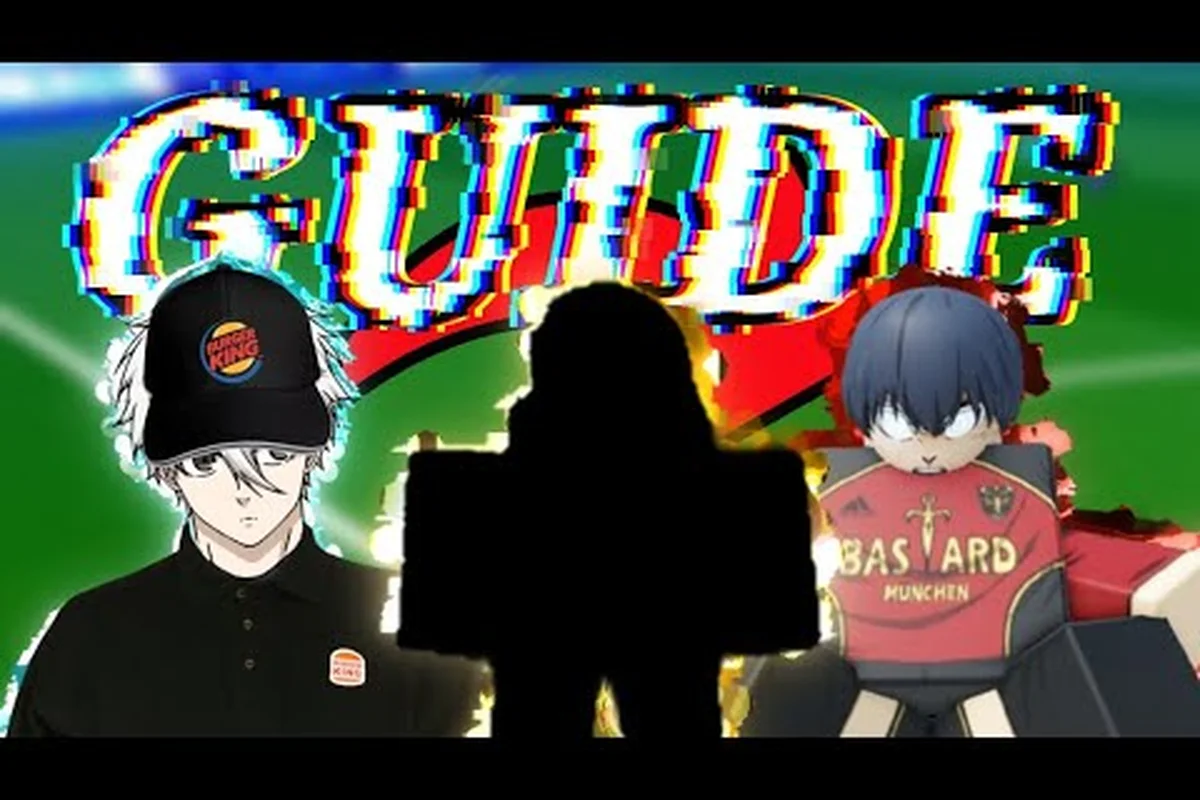
Community experience is useful for discovering how Styles feel in motion, but it should not override the current game interface. For example, Floaty 2's first-game tips video reflects community-tested advice rather than an official balance document. Use such videos to compare play patterns, then verify every ability description and timing detail inside the game.
Tutorial: Choosing Your Style
A first-match Style should match your current control level, preferred role, and willingness to support teammates. The official page confirms that your Style is selected before queueing and determines the abilities available during play. It does not publish exact damage, cooldown, or ability values, so the safest approach is to select the option whose tools support a clear responsibility and learn how those tools respond in practice.
Beginners should resist choosing solely because a character looks powerful or appears high on a community list. A Style that enables a recognizable action can be easier to use consistently than one requiring advanced timing, especially when ten players are moving toward the ball. Read the displayed ability descriptions and practice the simplest useful behavior rather than planning a complex combination before understanding the ball's movement.
| Selection factor | Beginner-friendly choice | Why to favor it |
|---|---|---|
| Control style | An option whose core movement feels comfortable | Reduces hesitation during simple possessions |
| Team role | A Style that supports a clear tactical responsibility | Makes positioning easier to understand |
| Ability complexity | One or two tools with understandable functions | Lowers the number of decisions during a fast match |
| Risk level | A balanced option rather than a highly specialized one | Creates more options when a play breaks down |
| Familiarity | A Style you have seen explained or tested before | Builds confidence before adding advanced techniques |
Choosing by Team Role
Teams still need ball carriers, passers, defenders, and players willing to attack space. A Style does not remove those responsibilities; it gives you tools for expressing them. Before queueing, decide whether you want to receive the ball, create chances, protect the lead, or press the opponent. That decision makes your positioning more consistent and reduces the temptation to wander into areas that do not help your team.
| Role | Main responsibility | First-game positioning question |
|---|---|---|
| Ball carrier | Retain possession and threaten the goal | Where is my nearest support option? |
| Passer | Offer a clear target and change the attack | Can my teammate see the next lane? |
| Defender | Delay the attack and protect space | Who is my direct attacking responsibility? |
| Runner | Offer a forward passing target | Am I stretching the defense or standing still? |
| Hybrid player | Cover two phases as needed | Who else on the team can cover my zone? |
If you are still deciding between several options, the wider Blue Lock: Rivals 5v5 guide can help you connect your selected Style with team positioning. The important principle is to choose one clear responsibility for the opening minutes, then adjust as you see how both teams use the ball.
What to Do First in the Queue
Use the pre-match queue to make one simple plan: find the ball, support the closest teammate, and recover immediately after a turnover. Avoid spending the countdown trying to memorize every possible ability. Read the active tool descriptions, confirm that the controls respond as expected, and choose a teammate whose movement you can follow once the match begins.
A useful pre-match checklist is:
-
Confirm your chosen Style and read its active tools.
-
Identify the function of each control without memorizing the entire interface.
-
Watch where teammates gather before kickoff.
-
Decide whether your opening responsibility will be attack or defense.
-
Plan to move toward the ball rather than waiting in a fixed corner.
-
Keep your first Awakening ready for a meaningful attacking or defensive moment.
-
Avoid rushing the first challenge just because the ball appears open.
These steps take only a few minutes, yet they prevent common confusion during the opening exchange. Blue Lock: Rivals explained simply means recognizing that Style choice, positioning, ball control, and timing all interact. No single ability can replace the need to occupy useful space and react to your team.
Basics: Positioning and Team Support
Positioning is the foundation of your blue lock rivals first game because every teammate has a limited view of the same fast-moving play. When you stand close to another player without a distinct purpose, the team becomes crowded and the carrier has fewer options. When you spread out without a passing relationship, the team loses structure. Aim for meaningful distance and a reason for every run.
A practical starting point is to watch the ball-side triangle: the ball carrier, a nearby support player, and a forward option. You do not need to memorize a full formation before your first match. Instead, notice where these roles sit and adjust your position so the ball carrier always has a plausible teammate to pass toward. This makes your movement understandable to others and improves the team’s response to turnovers.
| Situation | Good first reaction | Common mistake |
|---|---|---|
| Your team has the ball | Move into an open passing lane | Stand directly beside the carrier |
| The ball is far away | Hold a useful defensive position | Sprint without a clear assignment |
| A challenge is happening | Move toward the likely loose ball | Stop at the edge of the contest |
| Your team loses possession | Turn and locate the opponent with the ball | Continue toward the old attack |
| Your team regains possession | Rotate into support | Remain behind the ball and out of play |
| A shot is possible | Stay available for a rebound or reset | Cluster around the shooting lane |
Use Clear, Simple Runs
Your first match is not the place to force theatrical movements. A run should change the options available to the ball carrier. Start wide, check toward the carrier, and then either receive a pass or create a new lane. If the carrier is under pressure, cutting into the same crowded space may remove the easiest outlet instead of providing one.
You can apply the same reasoning defensively. When your team attacks, identify the opponent most likely to receive the next forward pass. When your team defends, identify the direct ball-side threat. These priorities do not require constant camera-perfect tracking, but they make your movement more purposeful than repeatedly chasing the ball's current location.
A short replay routine can accelerate learning. After your next match, remember one possession where you had space, one possession where you lost useful positioning, and one defensive transition where your recovery was late. The Blue Lock: Rivals beginner mistakes guide can help turn those observations into specific corrections rather than vague promises to play differently next time.
Keep Your Head Up
This habit is especially important because a successful pass does not end your involvement. Keep moving into a position that supports the next action. If the receiver turns, if the defender steps forward, or if the ball changes possession, you should already know whether to attack the space, press the new carrier, or drop into a recovery position. Good positioning is not a static location; it is a response to what the previous action makes possible.
What to Do First: Flow and Awakening
Flow and Awakening should be treated as separate tools during your blue lock rivals first game. Flow develops through involvement with the match, while Awakening is the short burst tied to your selected Style. The official page describes Flow as a state that sharpens touch and movement within a limited window, not as a permanent upgrade that remains active for the entire match.
| System | What the official page establishes | Practical first-game approach |
|---|---|---|
| Flow | Builds through involvement such as passes, dribbles, and defensive actions | Stay involved and avoid long passive spells |
| Awakening | Limited Style-specific burst | Save it for a possession that can change the match |
| Awakening Outfits | Listed as a cosmetic pass | Treat appearance as separate from performance |
| Exact durations | Not documented on the page | Verify current values in the interface |
Because exact percentages and cooldowns are not documented, do not plan around a specific activation count. Focus on behavior you can control: make safe passes, contribute in defense, dribble when it creates an advantage, and look for the moment your Awakening can turn a dangerous possession into a clear scoring opportunity.
Earning Momentum With Each Touch
A player can become useful without the ball by creating passing options and contesting possession. Complete passes that help the team retain control, challenge opponents when there is a reasonable path to the ball, and move into space so your teammates can find you. These actions support Flow while also improving your team's chances of keeping the attack alive.
Avoid chasing Flow at the expense of the match. An extra dribble into a crowded area may raise your involvement but damage your team's positioning. A safe pass can be more valuable because it keeps the ball, advances the attack, and allows another player to enter the play. The best first-match approach is to treat involvement as a consequence of good football decisions, not a separate objective.
Time Awakening Around Possession
Awakening becomes easier to use well when you recognize a high-value moment before it arrives. Examples include a counterattack with open space ahead, a defensive situation where you can directly pressure the carrier, or a final attack where a brief burst could improve your shot. The exact effects depend on your Style, so confirm what the ability does in the current interface.
Do not spend the burst during a routine midfield exchange merely because the meter is available. Wait until its effect has a reasonable chance to influence the outcome. If your team already has numerical pressure, a burst spent in traffic may only create another crowded action. If you are isolated with space, it may be the right moment to attack.
Community videos can demonstrate timing ideas, although their character-specific claims may become outdated after balance changes. Compare those demonstrations with your current match interface and treat the official game page as the authority for the shared systems of Flow and Awakening.
First Match Decision Guide
Your first match should be judged by useful decisions rather than a single flashy play. Did you receive the ball when teammates needed an outlet? Did you attack space without abandoning your responsibility? Did you recover after losing possession? These questions apply to attackers and defenders, and they reveal progress faster than judging yourself only by goals.
| Match result | What it may indicate | What to review next |
|---|---|---|
| Clear win | The team found useful spacing and efficient possession | Keep the same support habits |
| Close loss | Small positioning or timing errors mattered | Review transitions and final-third spacing |
| Heavy loss | Your team may have lacked ball control or defensive balance | Focus on safe passes and recovery routes |
| Loss while using Flow poorly | The burst may have come without a useful opportunity | Delay activation until a possession has value |
| Loss from turnovers | Support players may not have offered clear outlets | Create safer passing angles |
| Loss from transition gaps | Players may have stayed near the ball or goal | Identify early recovery assignments |
This table is a reflection tool, not a claim that one result has a single cause. Ten-player matches can turn because of positioning, possession errors, missed chances, or a combination of several factors. Review the beginning of the match as carefully as the final score because many later problems are created before halftime.
Make a Small Three-Match Plan
Improvement works best when you change one or two habits at a time. For your first three matches, focus on support positioning and safe ball retention. Whenever the carrier looks up, move into a visible lane. Whenever a pass becomes difficult, release the ball instead of forcing a risky dribble. Track whether these changes create better attacks without leaving your defensive position exposed.
| Match | Main focus | Simple success test |
|---|---|---|
| First | Space and support | Did the carrier have a teammate available when pressured? |
| Second | Recovery after turnover | Did you move toward the new ball side quickly? |
| Third | Awareness before receiving | Did you know where pressure and teammates were before passing? |
For more deliberate improvement, the Blue Lock: Rivals training drills guide can help you practice mechanics in focused sessions. Training is most useful when it targets the same decision you missed in a real match; otherwise, repetition may make your mechanics smoother without improving your football judgment.
What to Do After the Final Whistle
Do not judge the entire match by the scoreline. Review the first ten minutes because early positioning often sets the pattern for everything afterward. Notice which teammate offered the most reliable passing option, whether your team gave away possession in dangerous areas, and how quickly both sides recovered when the ball changed hands.
Then choose one concrete rule for the next match. “Play better” is too broad, but “move wider before receiving,” “do not challenge alone when help is close,” or “use Awakening only after winning possession” gives your attention a clear target. Write it down mentally and review whether you followed it.
Frequently Asked Questions
What should I do in my Blue Lock: Rivals first game?
Start by moving toward the ball, offering your ball carrier a nearby passing option, and recovering when possession changes. Choose a Style whose abilities feel manageable, save Awakening for a meaningful possession, and avoid chasing personal highlights that leave your team exposed. Your first priority is understanding space, timing, and team support.
Is Blue Lock: Rivals an official anime game?
No. The official Roblox game page describes it as an unofficial fan-made tribute, and the developer is the Blue Lock Rivals Unofficial Fans community group. It is not presented as an official release from Kodansha or the anime's rights holders, so community pages and videos should be checked for current information.
How long is a Blue Lock: Rivals match?
The official game page lists a server size of ten players, which supports the standard 5v5 format. It does not document the exact match duration on the available page, and community reports can become outdated as the experience changes. Verify the current match rules in the lobby instead of relying on a fixed time estimate.
Can I change my Style during a match?
Your Style is committed before queueing, and it determines which abilities are available during the match. Exact in-match restrictions should still be verified in the current interface, but the safest strategy is to treat your selection as a match-long responsibility. Learn your tools instead of assuming you can switch after kickoff.
Should I use Flow and Awakening immediately?
Do not treat Flow and Awakening as interchangeable. Flow builds through match involvement, while Awakening is a limited Style-specific burst. Build Flow through useful passes, dribbles, and defensive actions, then reserve Awakening for a possession where it can create a clear advantage rather than spending it during routine movement.
Your blue lock rivals first game becomes easier when you view it as a sequence of team possessions. Stay involved, create useful passing options, recover quickly, and time your special tools around the match instead of around the meter alone. Master those decisions, and the result will become a practical foundation for every match that follows.