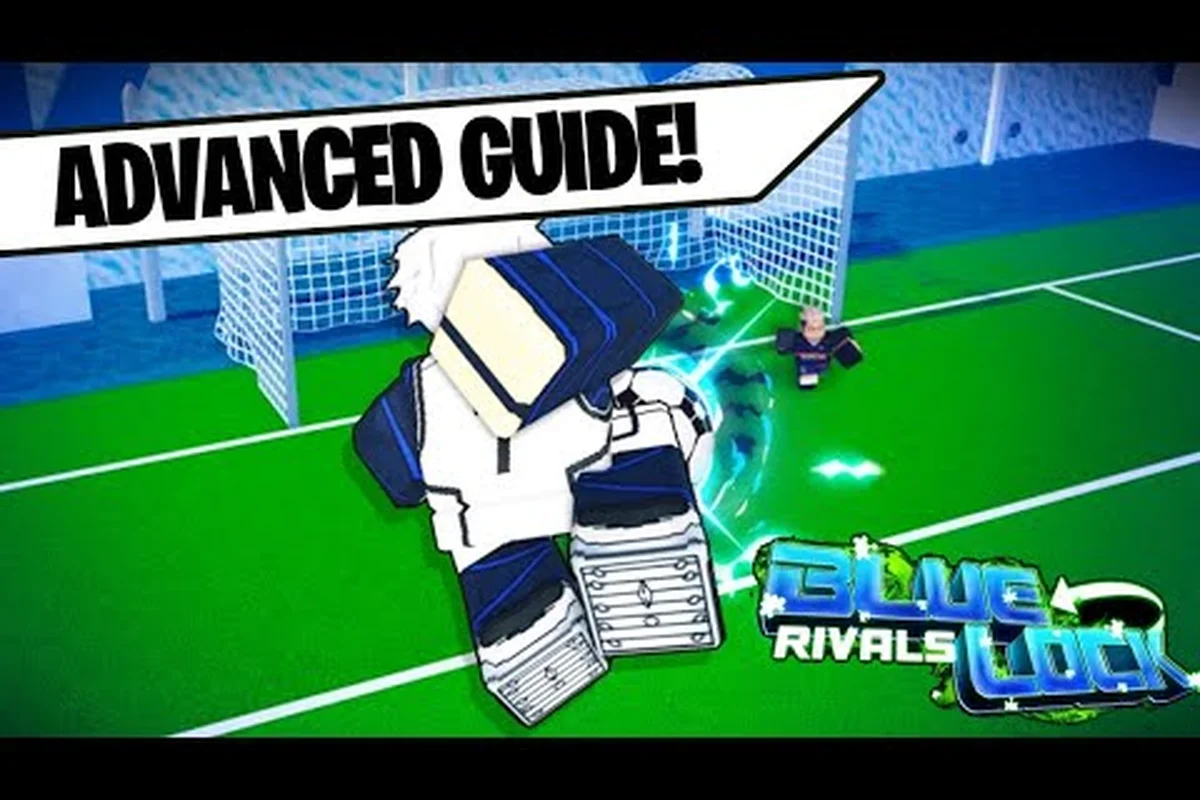
The blue lock rivals progression guide matters because steady match habits improve your play faster than chasing random rewards. Learn a practical routine that turns XP, cash, Flow, Awakening, and team play into measurable progress.
Progression Overview
Blue Lock: Rivals is an unofficial fan-made 5v5 football experience on Roblox, not an officially endorsed release from the anime’s rights holders. Its server size supports ten players per match, and the scoreboard counts goals, which means winning depends on more than individual scoring. A useful blue lock rivals progression guide therefore connects account progression with football decisions: earn experience through active play, spend cash carefully, build Flow through involvement, and use Awakening on possessions that can change the result.
The official Roblox page for Blue Lock: Rivals confirms that players select a Style before entering a match. That choice determines the abilities available during play, making Style knowledge a central part of progression. The page also distinguishes Flow from Awakening: Flow develops through actions such as completed passes, dribbles, and defensive work, while Awakening provides a limited burst tied to the selected Style.
| Progression area | What it supports | Best use | What is documented |
|---|---|---|---|
| Experience | Account advancement | Play matches and participate actively | The exact XP formula is not documented |
| Cash | Purchases through available shop options | Compare the item and price shown in-game | Exact prices are not documented |
| Spins | Reward-based currency or reward rolls | Use when the current selection is useful | Drop rates are not documented |
| Passes | Access to reward tracks | Review each reward before spending | Exact bonuses are not documented |
| Flow | Temporary in-match enhancement | Build it through meaningful involvement | It is not a permanent buff |
| Awakening | Limited Style-based burst | Save it for a decisive possession | Timing is more important than immediate use |
A strong blue lock rivals walkthrough starts with this separation of systems. Do not treat every menu as a direct source of football power, and do not assume that one currency is always better than another. The official listing identifies Awakening Outfits as cosmetic, while exact prices, reward rates, and progression multipliers are not documented clearly enough to quote. Verify those values in the current game interface.
What Counts as Real Progress?
Real progress should be visible in your decisions before it becomes visible in your rank. Track whether you are choosing appropriate Styles, maintaining possession, making useful passes, recovering defensively, and timing your limited burst. These actions create useful evidence that you can apply in the next match.
| Progress measure | Weak signal | Strong signal |
|---|---|---|
| Style selection | Changing characters whenever a match feels difficult | Selecting a Style that fits your role and planned possession |
| Flow | Chasing a meter without contributing to play | Passing, dribbling, and defending while the team has the ball |
| Awakening | Activating it during an unimportant moment | Holding it for a high-value attacking or defensive phase |
| Cash and Spins | Spending without reviewing the reward | Buying only when the shown item meets a clear goal |
| Team play | Ignoring passes and attempting constant shots | Moving the ball and creating options for teammates |
This is also the right time to review the Blue Lock: Rivals beginner guide if you still need a foundation in controls, roles, or match structure. The goal of this progression route is not to repeat basic setup; it is to turn basic competence into repeatable improvement.
XP and Reward Route
Experience and currency systems can create a false sense of advancement because rewards appear without explaining why they were earned. In this blue lock rivals progression guide, the recommended approach is to separate account progress from football progress. A match can end with a score and a reward screen, but your next-level improvement depends on the decisions that produced those results.
The game’s official Roblox page was recorded on November 1, 2026, with more than 5 billion visits and over 18,000 concurrent players. Those figures show the scale of the community, but they do not establish reward rates or XP formulas. Likewise, the experience includes more than 6.3 million favorites, yet popularity cannot tell you which item is best. Any guide promising exact multipliers without current documentation risks confusing a community estimate with a verified rule.
Start With a Match Plan
Before queueing, choose one Style and define the job you intend to perform. The Style determines which abilities you will have, so experimenting is useful only if the experiment has a goal. Decide whether you want to build possession, support a teammate, carry forward, or apply defensive pressure. The exact abilities and their values are not documented in the supplied official data, so verify the selected Style’s toolkit in-game.
| Pre-match decision | Recommended choice | Reason it supports progression |
|---|---|---|
| Style | One Style you understand | Reduces decision clutter while learning |
| Role | One clear responsibility | Makes your contribution measurable |
| Awakening plan | One clear trigger | Prevents wasteful early activation |
| Rotation mindset | Move with the team | Supports Flow and passing opportunities |
| Review target | One detail after the match | Produces actionable feedback |
The best blue lock rivals full guide principle here is to limit variables. If you change Style, role, and tactical focus in the same session, you may earn rewards but learn very little. Keep the Style stable for a block of matches, write down what worked, and make one adjustment at a time.
Use Rewards on a Three-Part Checklist
Before spending cash or Spins, ask whether the purchase improves football performance, improves convenience, or is purely cosmetic. The official page specifically lists Awakening Outfits as a cosmetic pass, so outfit purchases should never be justified as a guaranteed gameplay advantage.
-
Performance: Verify the displayed effect and whether it changes a meaningful part of your match.
-
Convenience: Consider whether the reward saves time or reduces routine friction without changing skill demands.
-
Appearance: Treat cosmetics as personal preference, not progression evidence.
-
Unknown value: If the interface does not explain the benefit, leave the purchase until it does.
| Purchase category | Evidence to check before buying | Progression judgment |
|---|---|---|
| Gameplay item | Exact effect and current in-game description | Potentially useful after verification |
| Utility item | What routine friction it removes | Useful only if your routine needs it |
| Awakening Outfit | Cosmetic label from the official page | Cosmetic preference |
| Unclear reward | Missing effect, price, or duration | Do not purchase blindly |
Community experience can still help you prioritize after the official systems are separated, but community reports should be treated as dated observations rather than permanent rules. If a player says a reward feels stronger, check the current game display and compare it with your own needs. That habit is essential in this blue lock rivals walkthrough because balance and reward details can change.
Daily Routine for Improvement
A blue lock rivals daily routine should produce learning, not just login streaks. Match count matters, but deliberate repetition matters more. Build sessions around one tactical target, one Style, and one clearly measurable outcome. This approach also reduces the frustration of repeatedly making unrelated changes after every loss.
A Focused 45-Minute Session
Use the following schedule when time is limited. It creates enough repetition to test a habit without encouraging mindless queueing. If a match ends sooner than expected because of early elimination or disconnection, begin again with the same target rather than switching targets mid-session.
| Time | Activity | Specific target |
|---|---|---|
| 5 minutes | Review the previous session | Choose one repeated mistake to correct |
| 5 minutes | Inspect the Style and plan | Define the intended team role |
| 15 minutes | Play focused matches | Complete passes and stay involved defensively |
| 5 minutes | Review the last match | Check timing, spacing, and possession decisions |
| 10 minutes | Play with a second target | Test one corrected decision under pressure |
| 5 minutes | Record results | Note what improved and what needs work |
This routine fits the mechanics described on the official page. Flow builds through involvement, so your session should reward passes, dribbles, and defensive actions rather than encourage standing still. Awakening should be tied to a decisive possession because its value is limited. If you need more detail on the distinction, the Blue Lock: Rivals tips guide can help you connect those systems to match decisions.
Review One Match Mechanically
Choose one match after a session and answer four questions. Did you contribute to possession, or did your team spend long stretches without you? Did your Awakening activation follow the plan? Did you receive information early enough to make a useful pass or defensive move? Did you lose the ball through a decision you recognized?
Avoid judging every moment by the final score. The official game page says the scoreboard counts goals only, so goals are useful outcomes but incomplete measures of team performance. A player may help create space, recover possession, or support buildup without receiving a goal. Similarly, a team can score without an individual following the plan correctly.
Alternate Volume and Quality
Three intense matches are not always better than two deliberate matches. Fatigue can make players activate Awakening early, take poor touches, or stop scanning the field. A better pattern is two focused matches, one short review, and a break before deciding whether another block is useful.
| Session type | Recommended use | Primary benefit |
|---|---|---|
| Short | Reviewing one tactical habit | Low fatigue, clearer attention |
| Standard | Learning a Style and role | Enough repetition to build confidence |
| Extended | Testing several situations | Breadth, but only after fundamentals are stable |
| Recovery | Light play or observation | Reduced risk of reinforcing sloppy habits |
The phrase “blue lock rivals how to improve fast” should not lead you to claim that more matches automatically create faster improvement. Fast improvement comes from shortening the feedback loop: recognize one problem, test one correction, and record whether the correction works. The daily routine simply places that loop into a schedule you can repeat.
Flow and Awakening Strategy
Flow and Awakening can look like similar “power-up” moments, but the official game page treats them as separate systems. Flow is an in-match state that develops through involvement and sharpens touch and movement during its active window. Awakening is a limited burst tied to the chosen Style. Treating them as interchangeable will lead to poor timing and wasted opportunities.
Build Flow Through Team Contribution
Flow responds to meaningful participation, according to the official listing. Completed passes, dribbles, and defensive actions are specifically mentioned as ways involvement builds. That creates a practical route: become useful in several phases of play instead of relying on one spectacular action.
| Match phase | Flow-building behavior | Common failure |
|---|---|---|
| Build-up | Offer a passing option and move into space | Staying behind the ball without a clear route |
| Possession | Keep the ball moving when appropriate | Holding possession without support |
| Transition | Recover or cover the correct area | Chasing an unlikely interception |
| Defense | Contest the ball and support the press | Standing near the goal without pressure |
| Final third | Create a clear finishing opportunity | Forcing a shot through multiple defenders |
This creates a practical blue lock rivals progression guide structure: improve one phase of your involvement at a time. Pass more cleanly for several matches, then work on defensive recovery, then improve movement into space. The exact Flow thresholds are not documented, so do not invent a target number. Look for the meter’s visible state and confirm when your touch or movement appears sharper.
Reserve Awakening for a Trigger
Give every Awakening activation one condition. It might be a transition with an opportunity to break the defensive line, a dangerous rebound, or a defensive moment when a Style-specific burst could prevent a shot. The precise effect depends on the selected Style and is not documented here.
| Awakening timing | Why it can work | Risk of wasting it |
|---|---|---|
| During harmless possession | None beyond the temporary burst | The team gains no meaningful advantage |
| When the ball is far from danger | You may disrupt spacing without pressure | The decisive phase arrives after the effect ends |
| On a dangerous transition | The burst matches the importance of the possession | A forced attempt may still fail |
| During a clear defensive emergency | The Style can affect the immediate threat | The exact defensive impact must be verified in-game |
Community videos can help identify what players are testing, but they should not replace current interface information. For example, this community playstyle test shows that Style experimentation is a popular subject. Treat its conclusions as community opinion, and compare them with the selected Style in your own matches.
Connect Burst Timing to the Team Plan
Before activating Awakening, name the possession goal: create a shot, protect a lead, regain control, or relieve pressure. That simple decision makes your timing easier to evaluate. If the activation does not serve the goal, preserving it for a later possession may be more valuable than using it immediately.
A helpful review entry reads: “I activated Awakening during a dangerous transition, but I had no supporting teammate.” This identifies a spacing problem rather than blaming the burst. Compare that note with a successful entry: “I kept the move available until the team reached the final third, then used it on a clear chance.” The second note teaches a repeatable principle.
How to Improve Fast Through Team Play
The blue lock rivals how to improve fast approach should prioritize reliable habits because team football exposes weak decisions more quickly than solo practice. You can improve individually by practicing mechanics, but match play shows whether you recognize space, support possession, and defend collectively. Use targeted sessions and review rather than random queueing.
Fix Your Decision Hierarchy
When the ball changes sides, your attention should move through a predictable order. First identify whether your team has possession. Then determine your role, locate the nearest meaningful option, and only afterward consider individual ambition. Awakening enters this sequence after the team context is clear.
| Decision order | Question to ask | Practical result |
|---|---|---|
| Possession | Does my team have control? | Avoids attacking or defending the wrong phase |
| Role | What does my selected Style require here? | Keeps positioning consistent |
| Spacing | Where is the nearest teammate or defender? | Creates a passing lane or pressure point |
| Action | Can I pass, carry, recover, or hold? | Produces a deliberate decision |
| Awakening | Is this the decisive possession? | Saves the burst for meaningful timing |
This hierarchy also helps you avoid turning every recovery into a desperate dribble. If your team lacks a safe outlet, moving the ball toward pressure may be a legitimate choice rather than proof of poor skill. Evaluate decisions in context and focus on repeatable errors.
Train Team Situations, Not Just Scoring
Because the scoreboard counts goals, goals are the easiest measure to notice, but they are not the only performance target. Assign a secondary goal that supports the scorer: complete a pass into the attacking area, maintain possession for a set period, recover possession after losing the ball, or prevent a dangerous transition.
The Blue Lock: Rivals training drills guide can help with isolated mechanics, but pair each drill with a match objective. If you practice finishing, finish after receiving a pass under realistic pressure. If you practice defending, begin from a recovery position where teammates are already organized. This creates a stronger bridge between practice and live play.
| Two-match block | Drill focus | Match focus | Review question |
|---|---|---|---|
| First | Controlled pass and reception | Give up one easy option | Did I simplify under pressure? |
| Second | Recovery and positioning | Win the next contested possession | Did I arrive before the danger? |
| Third | First touch under pressure | Keep a forward option available | Did my touch create time? |
| Fourth | Burst timing | Use Awakening on a decisive phase | Did the team gain value from it? |
This kind of block makes improvement easier to evaluate because each match tests one relationship between skill and team behavior. It also prevents the common mistake of playing many matches without remembering which decision you were trying to change.
Keep a Match Journal
Write three lines after each focused session. Record the tactical target, the clearest positive decision, and the first error that repeated. Add a fourth line only when you test a new Style or change a habit. This structure creates useful evidence without turning every match into a lengthy report.
A practical journal might say: “Target: Flow through passing. Positive: found a teammate before pressure arrived. Error: delayed the pass after losing momentum. Next: scan before receiving.” That journal is more actionable than “bad match,” because it identifies the next observable behavior.
Style, Reward, and Match Decision Checklist
The final stage of this blue lock rivals full guide connects every system into a repeatable decision checklist. Before queuing, review your Style, team objective, Flow plan, and Awakening trigger. After the match, review the same points and your reward purchases. This creates one continuous progression route instead of several disconnected menus.
Pre-Match Commitment
Make a short commitment before the loading period ends. Choose a Style you can use consistently, select one team responsibility, and name the condition for Awakening. Keep the commitment realistic: one match should test one main behavior rather than demand a complete personality change.
| Pre-match field | Specific choice | Avoid |
|---|---|---|
| Style | A role that supports your strengths | Choosing only for appearance |
| Team objective | One contribution to possession or defense | Focusing only on your own shot count |
| Flow plan | Stay involved through passes, dribbles, or defensive work | Waiting without meaningful actions |
| Awakening trigger | A dangerous possession | Spending it during a routine moment |
| Review target | One decision to improve | Listing ten unrelated goals |
Post-Match Reward Review
Open the reward screen only after recording your first football review. This prevents rewards from distracting you from the lesson. If you receive cash, Spins, experience, or a pass progress item, check the current in-game description before deciding what it means. Exact multipliers and prices are not documented, so the interface remains the final authority.
Do not spend every balance immediately. Keep a reward buffer when you are waiting for a specific useful item, and avoid confusing rarity with usefulness. The official game page confirms that cosmetic Awakening Outfits exist, which is a clear example of a reward that may have value to the player without directly changing match performance.
One-Month Review Cycle
At the end of a weekly block, compare behavior rather than only menus. Look for fewer turnovers, clearer Style selection, better Flow-building participation, more useful Awakening timing, and more considered purchases. Rank indicators may change for many reasons, so they should support the review rather than become its only evidence.
| Review frequency | Measure | Action after review |
|---|---|---|
| After every match | One tactical target | Make one small adjustment |
| After every session | Flow involvement and burst timing | Keep or change the planned behavior |
| Weekly | Style choice, reward spending, team contribution | Simplify the routine where needed |
| Monthly | Overall progression and consistency | Set a new block of development goals |
The route works because it treats progress as a chain of decisions. Experience and rewards support your account, but habit quality determines whether those systems translate into stronger play. Keep the choices visible, update them when the game changes, and always verify undocumented values in the current interface.
Frequently Asked Questions
What is the fastest way to progress in Blue Lock: Rivals?
No verified formula guarantees the fastest route, so focus on active matches, clear Style selection, and useful team play. Earn experience through normal progression rewards, then check each cash, Spin, or pass option in-game before spending. Because exact XP multipliers, prices, and drop rates are not documented, treating community estimates as guarantees can cost resources.
How often should I play to improve?
Use short, focused sessions rather than one exhausting queue. A 45-minute routine with two or three matches, a review, and one correction is enough for many players. Review whether you contributed through passing, dribbling, and defensive actions, because Flow develops through involvement. Add more matches only when your decision quality remains stable.
Should I spend cash or save it for Spins?
Choose based on the reward currently displayed and your immediate goal, not on an assumed universal rule. Cash may cover items shown in the shop, while Spins are associated with reward rolls, but exact prices and rates are not documented. Review the interface, avoid impulse spending, and save when you are waiting for a specific item or cosmetic that genuinely interests you.
When should I activate Awakening?
Save it for a possession with clear tactical value, such as a dangerous transition or an immediate scoring threat. Activating it during an unimportant phase may waste its limited duration. Because the result depends on your selected Style, verify its actual effect in-game and use the official Blue Lock: Rivals game page as the reference for the current systems.
Is Flow a permanent stat increase?
No. The official game page describes Flow as an in-match state that develops through involvement and improves touch and movement during its active window. It is not a permanent buff. Build it by completing passes, dribbling, and taking defensive actions, then compare your visible performance during the active period with your normal play.