
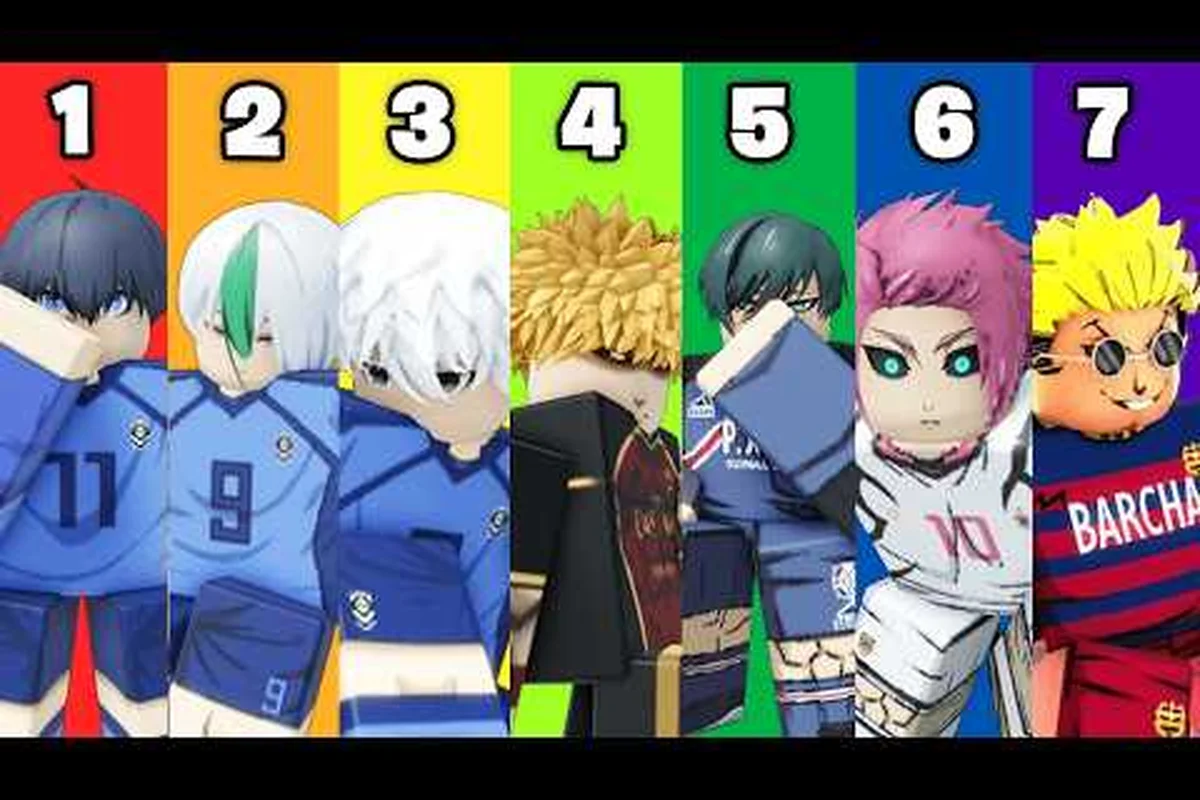
Blue Lock: Rivals style rarity determines which abilities you bring into each 5v5 match, so the right pull can shape your entire playstyle. Learn how community rarity labels, Limited Styles, and in-game testing help you identify strong options without relying on invented drop rates.
Style Rarity Bands Explained
Blue Lock: Rivals style rarity is most useful as a guide to what you can expect from a pull, not as a promise that one label determines your win rate. The game is a fan-made Roblox football experience, and its official Blue Lock: Rivals game page confirms that players choose a Style before queueing, which then determines the abilities available during the match.
The official game page names Master Class and World Class among the highest Style classes and describes standard pulls without assigning every intermediate label. Beyond those two names, players commonly discuss labels such as Common, Rare, Epic, Legendary, and Mythic, with some Limited Styles attached to seasonal events. Exact percentages, a complete official rarity ladder, and a definitive Style count have not been published, so treat every label outside Master Class and World Class as community shorthand rather than an official band. The table below records community usage only; it is not an official ladder.
| Community label (unofficial) | What it generally signals | How to evaluate a pull |
|---|---|---|
| Common | A standard entry in the Style pool | Learn its abilities before judging the pull |
| Rare | A less common regular Style | Compare its tools with your normal role |
| Epic | A notable rarity tier | Test it in several matches |
| Legendary | A high-tier regular pull | Prioritize practical impact over the label |
| Mythic | A premium rarity tier | Check whether its abilities fit your playstyle |
| Master Class | A specialized high-tier label | Compare functions and team needs |
| World Class | The highest commonly discussed band | Treat the label as one factor, not a verdict |
| Limited | Seasonal or event-associated availability | Check the event details in game |
These labels should be separated from the Style’s actual functions. A player can prefer a less flashy pull whose movement, shooting, or support tools suit the way they attack, while another player may value a premium Style because its kit covers a weakness in their usual lineup.
Rarity versus character usefulness
Rarity answers a collecting question, while usefulness answers a gameplay question. Before committing to a match with a new Style, ask whether it helps you create chances, finish them, support a teammate, or provide a different option when your normal route is blocked. The verified roster includes Isagi, Bachira, Chigiri, Nagi, Barou, Rin, Sae, Shidou, Kaiser, Loki, Lavinho, Snuffy, Zantetsu, Yukimiya, Aiku, and Gagamaru, but no official ranking places every Style in a fixed tier.
The Blue Lock: Rivals Style overview is useful for reviewing the broader character pool before you focus on rarity. A short character list also helps prevent a common mistake: assuming that a rare pull is automatically better than a familiar Style that already works well with your team.
Why no official drop table exists
The official game page does not publish exact spin percentages, prices, damage values, or cooldown numbers for these Styles. As a result, any precise claim about the odds of receiving a Mythic or Legendary Style should be treated cautiously. Community reports can describe what players have seen, but they cannot replace an official drop-rate table.
This limitation makes experimentation important. The best way to evaluate a pull is to use it in a consistent role, observe how its abilities interact with teammates, and compare results with another Style that serves the same function. A rarity label can guide your attention, but it cannot tell you whether a Style will be fun or effective in your hands.
Rarity List for Regular Styles
A practical blue lock rivals rarity list should focus on the labels players use to organize their collection, then add role information so each entry remains useful. The game’s community conversations commonly separate standard styles from higher-tier and event-based styles, although the exact boundaries can vary with updates and interpretation.
| Community rarity grouping | Examples from the verified roster | Typical strength to investigate |
|---|---|---|
| Common and baseline styles | Standard versions of Isagi, Bachira, Chigiri, Nagi, Barou, Rin, Sae, and Kaiser | Familiar functions that are easier to evaluate across matches |
| Rare styles | Popular regular styles that players encounter less often | A role-specific alternative to a common main |
| Epic styles | Premium regular pulls with distinctive tools | More unusual movement, finishing, passing, or support options |
| Legendary styles | High-tier regular Styles favored by collectors | Broad appeal and potentially distinctive in-match tools |
| Mythic styles | Premium Styles associated with the game’s top collecting tier | Worth testing carefully, without assuming automatic superiority |
| Master Class styles | Specialized styles discussed above the regular high tiers | A close comparison against familiar playstyles |
| World Class styles | The top commonly cited regular tier | More reasons to test rather than immediately equip |
| Limited styles | Event-linked versions, including a reported Halloween Shidou variant | Availability and event context matter |
The roster itself is not a rarity list. For example, Isagi is associated with reading space and arriving where the ball will be, while Bachira emphasizes dribbling and unpredictable control. Those descriptions explain their roles, not their odds or collecting rarity. Use the roster to identify the function first and the community rarity label second.
Separating regular Styles from event variants
Limited Styles are different from ordinary rarity bands because their availability may be tied to a seasonal event. A Halloween Shidou variant, for example, is community-observed as an event-linked Style. This makes it helpful to keep three pieces of information in separate notes: the character, the variant, and the event window.
| Tracking field | What to record | Why it matters |
|---|---|---|
| Character | Isagi, Bachira, Chigiri, or another verified Style | Prevents different tools from being confused |
| Rarity label | Common through World Class, where applicable | Tracks collection tier without inventing odds |
| Availability | Regular, event, or seasonal | Determines whether the item is currently obtainable |
| Role | Finisher, dribbler, passer, defender, or goalkeeper | Supports practical comparisons |
| Experience | Casual test or several matches | Separates first impressions from useful evidence |
How to interpret community tier debates
Player tier debates often mix three separate questions: Can the Style win a duel, can it fit a team, and is it rare enough to feel impressive? A Style can be excellent in one context and frustrating in another. For example, a dribble-first Style may thrive when given space, while a style built around reading space may become more valuable when a match becomes crowded and direct.
Community video coverage such as KTG Gaming’s test of every playstyle demonstrates how players evaluate the roster in practice. Treat the specific judgments in that video as dated community opinion, though, because the same Style can change after balance updates or when the surrounding meta changes.
Mythic Styles and Legendary Pulls
Blue Lock: Rivals mythic styles are treated as premium collecting targets, but the label does not disclose exact abilities, drop probability, or a guaranteed advantage. Blue Lock: Rivals legendary styles receive similar attention because players often expect the rarest-looking pull to deliver the biggest performance gain.
That expectation needs a reality check. The Style determines which tools enter the match, yet the official page confirms that the scoreboard counts goals only. Goals depend on possession, positioning, team chemistry, defensive pressure, and execution—not simply on the display name attached to a pull.
Mythic Styles: collect first, test second
A Mythic pull deserves a structured evaluation rather than an immediate permanent lock. Mark down its basic functions, use it in at least a few matches, and compare it with a Style that performs a similar role. If your test does not produce enough evidence, keep it on the bench while another player or formation creates opportunities.
-
Compare equivalent roles: Test the Mythic Style against a familiar finisher, dribbler, passer, or defensive option.
-
Watch team fit: Notice whether its tools encourage passes or require teammates to adjust.
-
Track difficult moments: Note whether it creates value when possession is limited.
-
Separate preference from strength: A Style can feel excellent without being the objectively strongest option.
-
Avoid universal claims: Exact balance rankings remain community opinion until officially documented.
For a wider view of premium options, the Master Class and World Class Style overview clarifies how those labels relate to Mythic Styles without relying on community rarity lists. When reviewing a pull, compare its role with the available classes: a finisher judged by goal output, a dribbler by ball control and forward progress, a passer by chance creation, and a defender by pressure and recovery. This makes the rarity label a starting point for evaluation rather than proof that a Mythic Style is always the best permanent lock.
Legendary Styles: value comes from fit
Legendary Styles are attractive because they combine a recognizable character with a high collecting tier. To judge them, ask whether the kit covers a role you already use well or opens a new path. If the Style only repeats a familiar option but with a nicer rarity tag, its practical value may be limited. If it gives you a reliable way to progress the ball, support a teammate, or attack a different lane, it may deserve more attention.
| Evaluation factor | Mythic question | Legendary question |
|---|---|---|
| Collecting value | Is it a personal missing Style? | Does it complete a broader collection goal? |
| Role value | Does it unlock a useful team function? | Does it improve a role you already understand? |
| Match value | Can you use its tools in several situations? | Can it contribute consistently rather than only on highlight plays? |
| Upgrade value | Is it meaningfully different from your main? | Is it a genuine alternative, not merely another pull? |
| Evidence | Did several matches support the first impression? | Did testing reveal a clear advantage or preference? |
Mythic or Legendary for a new account?
A new account benefits more from understanding a few baseline Styles than from delaying play to chase a premium tier. Common styles still decide which abilities are available in a match, and becoming familiar with one Style can improve positioning and decision-making before you own any high-rarity pull.
A sensible progression is to stabilize one role, learn how teammates support it, and then test a premium Style once it arrives. That sequence creates a clean comparison. Without a reliable baseline, it becomes difficult to tell whether a Mythic or Legendary pull performs well because it suits the player or because the player is simply enjoying a rare item.
Epic Styles and Rare Styles
Blue Lock: Rivals epic styles occupy a middle-to-high collecting tier that players may pursue for variety, while Blue Lock: Rivals rare styles often provide a meaningful alternative to common pulls. The most useful distinction is not visual prestige, but whether the Style changes how you approach a match.
Epic Styles deserve special attention when they offer a tool that complements an existing lineup. A dribbling option may give a team more variety against compact defenses, while a passing or defensive Style may help players who struggle to create reliable possession. Legendary and Mythic Styles can still be better choices, but an Epic Style is more accessible when its function fits your habits.
Reading rare Style value without a tier formula
There is no official formula that converts rarity into win rate, so the most responsible method is a controlled comparison. Keep the same match type, position, and general objective when switching Styles. Although goals are the only stat counted by the official scoreboard, your notes should include whether you received useful passes, created clear chances, and contributed defensively.
| Observation | What it tells you | Why rarity alone cannot answer it |
|---|---|---|
| Ball movement improved | The Style offers relevant support or creation | A common Style can also fit a coordinated team |
| Chances became clearer | The tools complement your positioning | High rarity may still require difficult execution |
| More possession was retained | The Style suits your risk level | Rarity does not document possession efficiency |
| Teammates found a clear role | The kit enables a recognizable pattern | Fit can outweigh collecting prestige |
| Play felt inconsistent | More practice or another role may be needed | A first impression is not a balance verdict |
Why common Styles remain useful
Blue Lock: Rivals common styles are not dead content simply because higher tiers exist. They provide baseline tools for learning roles, and some players may perform better with them because their movement and decision-making already fit those abilities. A common pull can also be easier to master, allowing its user to focus on positioning rather than adjusting to unfamiliar tools.
The rarity list should therefore include all tiers without treating common items as disposable. Players often build confidence by mastering a straightforward Style, then experiment with rare and Epic versions once they understand the match. This progression also makes the blue lock rivals style rarity easier to read in practice: the label becomes a starting point, and your match notes provide the evidence.
Choosing between two mid-tier pulls
When two Styles appear to have similar value, choose the one that complements the teammates around you. If one opens space for a speed-focused teammate and another asks for a patient passing buildup, the better choice may change from match to match. This is especially important in 5v5 football, where the server size keeps the field active and every role has a direct influence on the goal total.
For a broader view of individual functions, compare the Isagi Style guide with another character guide. That approach helps you understand the role itself, then judge its rarity label against the practical value of its tools.
Practical Style Rarity Evaluation Checklist
A blue lock rivals style rarity checklist should answer four practical questions: what did you receive, what can it do, how did it perform, and would you select it again? The official page supports the first two points at a basic level, while match notes supply the rest. Exact ability descriptions, drop percentages, and cooldown data remain undocumented, so verify those details in game.
Before you spin
Spend a few minutes reviewing your current Styles before opening another spin menu. Identify the role you use most, the role you rarely cover, and whether you want a new option for those needs. This makes it easier to distinguish a genuinely useful pull from one that merely duplicates a character you already own.
-
Set a role goal: Choose finishing, dribbling, creation, defense, or goalkeeping.
-
Name the preference: Favor the playstyle you enjoy, not only the highest visible tier.
-
Check event timing: Separate regular availability from a Limited Style window.
-
Set a test plan: Decide which match type or team setup will provide the fairest comparison.
-
Record the result: Write down your first verdict while the experience is fresh.
After the pull
Do not evaluate a Style from its community rarity label alone. Watch how it changes your movement, pass options, attacking routes, and defensive responsibilities. If the Style requires a particular rhythm, give it more than one match before making a final judgment because unfamiliar tools often make early results look worse than they are.
| Testing stage | What to watch | Decision to make |
|---|---|---|
| First look | Available tools, general movement, required positioning | Is the role understandable? |
| Early match | Basic success with the ball and without it | Does the kit need practice? |
| Team match | Passes received, space created, defensive balance | Does it fit teammates? |
| Repeat test | Consistency across similar situations | Is the first impression holding up? |
| Long-term decision | Enjoyment, versatility, collection value | Equip, rotate, or bench it |
Rotate instead of discarding
Keeping multiple Styles available is useful because opponent behavior and team composition can change the best route. A player might favor a dribble-heavy build in open spaces but choose a more direct Style when the opposing side defends the center effectively. Rotation also helps you learn which roles your own reaction time favors.
The blue lock rivals rarity list becomes practical when it informs rotation. Instead of asking only whether a Style is Epic, Legendary, or Mythic, ask whether it gives you another answer when your usual plan fails. That broader toolset can be more valuable than owning one prestigious Style and ignoring everything else.
Limited Styles, Master Class, and World Class Labels
Limited Styles are event-associated versions that may disappear when their availability window closes. Master Class and World Class are the high-end classes named on the official game page, but it does not provide a complete published order, the intermediate labels, or exact pull rates. Their value should be evaluated using the same practical checks as regular Styles: role fit, consistency, and team synergy.
This distinction matters when tracking your collection. A regular Legendary Style remains available according to the game’s current pool, while a Limited Style may have a time-sensitive context. If you are deciding whether to chase an event pull, check the live game interface for current availability rather than relying on an old community screenshot or video.
| Rarity context | Availability pattern | Best tracking method |
|---|---|---|
| Regular Styles (community labels) | Part of the regular Style pool, subject to updates | Note character, role, and label |
| Limited Style | Tied to a seasonal or special event | Record the event and availability period |
| Event variant of an existing character | A themed version associated with a period | Track base character separately |
| Reworked Style | Existing option whose functions may have changed | Re-test after updates instead of relying on old rankings |
Master Class and World Class in practice
A Master Class Style may be worth prioritizing if its tools fit a recurring role, while a World Class Style may deserve a longer test when its strengths are difficult to use consistently. The labels can help organize collection goals, but they do not disclose numerical power. A player who understands how to exploit a Style’s strengths may get more value from it than a player who owns several premium pulls without a clear plan.
The Blue Lock: Rivals style roster includes verified characters such as Aiku, Snuffy, Zantetsu, Yukimiya, Lavinho, Loki, and Gagamaru. Their inclusion demonstrates roster breadth, not a confirmed Master Class or World Class assignment. Verify each current label in the game before treating it as fixed.
When a Limited Style is worth chasing
A Limited Style is attractive when it offers a familiar character in a distinct event context or a function that fills a role your collection lacks. The decision should still account for opportunity cost. If chasing the event requires many spins or delays building mastery of a current main, waiting may be sensible; if the event is available now and the Style directly improves team coverage, trying it can be worthwhile.
Avoid assigning a universal financial value because exact prices are not documented in the official material available for this guide. Check the current game interface for spin and event details. The safest approach is to set a boundary before pulling, watch the result rather than repeating indefinitely, and keep enough resources for ordinary progress.
Rarity Mythbusts and Current Verification Checklist
Several claims about Blue Lock: Rivals rarity can sound authoritative while remaining unsupported. The clearest source is the official Roblox game page, which describes the game’s unofficial status, 5v5 format, Style selection, and the existence of spin systems. It does not publish an exact Style drop table.
This distinction is essential when checking Blue Lock: Rivals style rarity claims: a player’s label for a Style may reflect its animation, match impact, or community reception, but it is not proof of its official rarity. For example, calling a Style “Legendary” because it performs well in a 5v5 match does not establish a published Legendary percentage, nor does a “Mythic” ranking guarantee permanent availability. Until an official drop table or comparable source confirms the rate, community labels should be treated as descriptive tiers rather than exact probabilities, guaranteed outcomes, or fixed rankings.
Myth: Mythic always means the best Style
Reality: Mythic describes collecting rarity, not guaranteed performance. A premium Style can be less suitable for a particular player than a common option whose tools match their habits. In Blue Lock: Rivals, rarity should be evaluated alongside a Style’s actual functions: a Mythic dribble build may lack the direct finishing or defensive tools that a Rare Style provides, while a Legendary Style can be more valuable when its activation and stat bonuses complement the player’s chosen role and matchup. The practical rule is to compare each Style’s effects, activation requirements, and role fit rather than assuming the highest rarity automatically produces the strongest results.
Myth: one fixed Style tier list will stay accurate forever
Reality: Updates can rebalance Styles, add characters, or alter the collection pool. For example, a Style the community places in one band may be described differently after a balance patch, while a newly released playable character can shift the community’s Blue Lock Rivals rarity discussion. Because the roster and tier thresholds can change across updates, earlier community rankings should be treated as dated snapshots rather than permanent facts; checking the current Style list before planning a pull is more reliable than relying on an old tier guide.
Myth: every Limited Style is permanently available
Reality: Limited Styles are linked to seasonal or special events, so their availability can change when a banner ends. In Blue Lock: Rivals, a Style shown in a Mythic, Legendary, Epic, Rare, or Common rarity list may return only if its associated event is active. Check the live Style interface and event timing before assuming a past appearance can be repeated on demand.
Myth: rarity explains the scoreboard
Reality: The official scoreboard counts goals, but goals emerge from positioning, possession, creation, finishing, and team coordination. The rarity label does not calculate any of those factors. In Blue Lock: Rivals, a Mythic, Legendary, Epic, Rare, or Common style can still produce ordinary match results: a Mythic striker may finish poorly under pressure, while a Common player can score through timing and space. Rarity therefore describes the style’s classification—not its guaranteed goal contribution, activation rate, or impact on the scoreboard.
A reliable daily verification routine
Spend one minute confirming the current rarity label, event availability, and Style functions each time you plan to spin. If a new update has arrived, revisit older comparisons because balance may have changed. Save notes separately for pulling and competitive play so that a brief showcase impression is not mistaken for an accurate performance analysis.
The final takeaway is straightforward: use rarity to prioritize which Styles to test, not to end the analysis. Regular and common styles remain useful foundations, Rare and Epic styles can add practical variety, and Legendary, Mythic, Master Class, World Class, and Limited styles are best judged through live testing, current event information, and team fit.
Frequently Asked Questions
What is the highest rarity in Blue Lock: Rivals?
The official game page names Master Class and World Class as high-end classes but does not publish a complete rarity ladder. Community discussions usually place World Class at the top of the regular pool, while Limited Styles sit in separate event-based categories, so confirm current labels in game rather than assuming an old community list is permanent.
What are the rarest styles in the game?
Players commonly chase Mythic, Master Class, and World Class labels, but no official source provides exact percentages or a definitive list of every Style in those bands. Treat community observations as guidance, and verify the current category of each Style in the game interface.
Is a Mythic Style always better than a Legendary Style?
No. A Mythic pull can offer a desirable role, yet rarity does not reveal numerical power or guarantee better results. Compare equivalent Styles across several matches, paying attention to possession, chance creation, defensive contribution, and how comfortably you can use the available tools.
Can Limited Styles return after their event ends?
That depends on the specific event and the developer’s current rules. Limited Styles are commonly tied to seasonal windows, and repeat availability is not documented in the official page material. Check the game’s event interface and current notices for accurate timing information.
Where can I verify style rarity and drop information?
Use the official Blue Lock: Rivals Roblox page for game facts and the live spin interface for current labels. Community guides and videos can explain player experiences, but they should not be treated as an official drop-rate table when exact percentages are not documented.