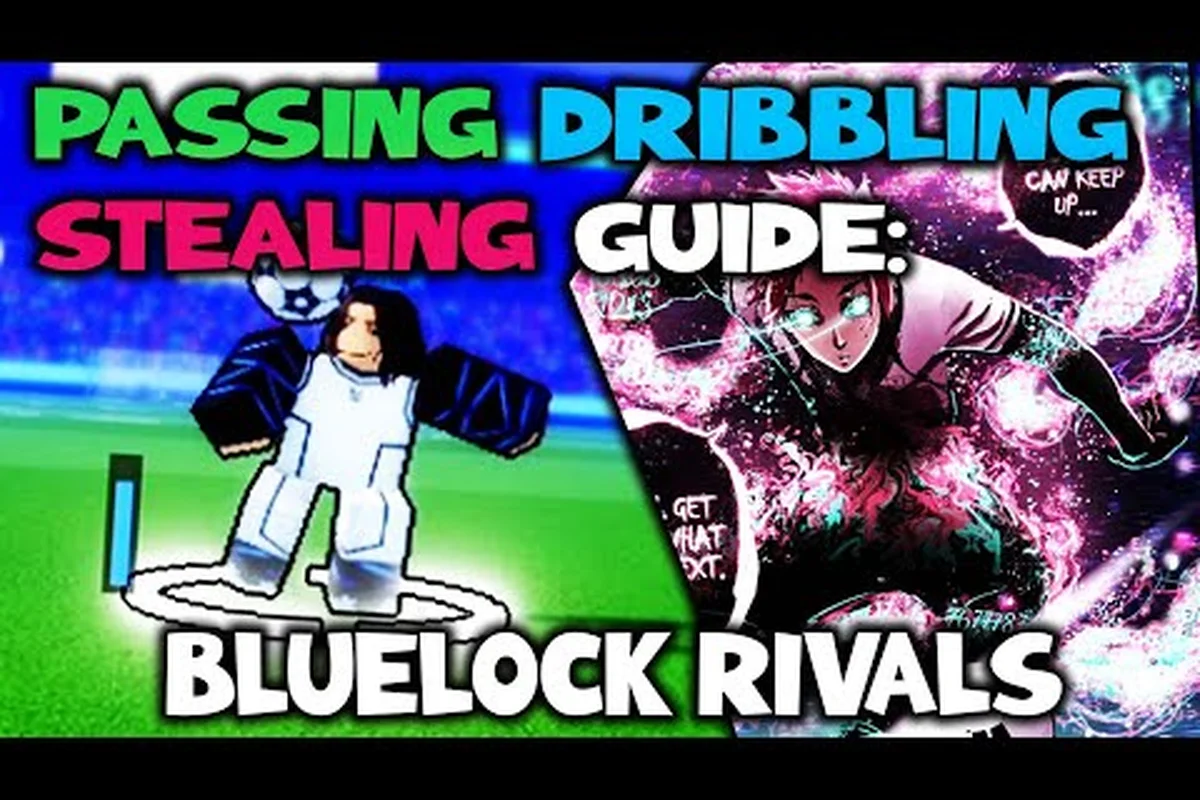
Stealing the ball in Blue Lock: Rivals depends on reading the dribbler’s sprint animation and cutting the route of the ball, not winning a reckless tackle. Angle control lets a defender force a pass toward a teammate or the touchline, while smart pressure can trigger a miss and create an immediate counterattack. A slide tackle may work against a predictable dribbler, but mistimed contact can leave you out of position and expose your striker to a shot. Mastering these defensive skills turns opponent mistakes into scoring opportunities.
Stealing Fundamentals
Stealing the ball in Blue Lock: Rivals begins with understanding where the ball and the opponent are moving. The official Blue Lock: Rivals Roblox game page identifies standing challenges, tackle timing, and the ankle-breaker move as core parts of the stealing system. Exact frame data, damage values, and cooldowns are not documented, so players should judge success by whether possession visibly changes and the opponent loses a useful option.
A productive defender controls space before making contact. That means keeping your body between the ball and the most dangerous passing lane, matching the attacker’s speed, and waiting for the ball to enter a range where the challenge is likely to connect. Charging while the opponent still has firm control usually gives the ball carrier more options and leaves you recovering after the challenge.
| Defensive situation | Better first action | Risk to avoid |
|---|---|---|
| Ball is beside the opponent | Move across the carrier’s path | Reaching from behind without control |
| Ball is several steps ahead | Close space and wait | Sprinting into a challenge too early |
| Opponent is shielding the ball | Angle the route toward the sideline | Standing directly in front and allowing a turn |
| Ball is loose | Arrive with a controlled challenge | Overrunning the ball or changing direction late |
Read the possession, not the animation
Every possession phase deserves a different response. A slow touch near the defender’s feet suggests immediate pressure, while a longer dribble may be preparing a burst. When the carrier looks up before touching the ball, a teammate could be entering the picture. Although the official page does not document readable animation cues, player experience suggests that watching the hips and the ball-carrier’s movement direction is more useful than reacting to a single animation.
Approach from an angle that removes one choice. If the carrier can turn toward the center, close the center first; if the carrier is already pinned near the boundary, preserve that pressure. This is more effective than chasing directly from behind because each step reduces the available space. It also makes a slide tackle easier to justify, since a reckless dive from far away leaves the defensive line exposed.
Build a repeatable pressure sequence
Use the same compact sequence on every duel: approach without sprinting, angle your run toward the opponent’s likely next-touch lane, and time the challenge for the instant the ball enters a reachable pocket. This controlled approach is more effective than charging with the tackle because it removes free running space without exposing your back, while a slide tackle becomes a last-resort commitment rather than the default response.
-
Close at controlled speed until the opponent’s next touch is threatened.
-
Match direction so the carrier cannot freely accelerate into open grass.
-
Wait for the ball to separate from the opponent’s immediate control.
-
Challenge at the first practical contact point.
-
Continue toward the ball after winning possession instead of celebrating or stopping.
That final step is what converts a defensive play into an attack. Players who win the ball and stand still give the opponent time to reset. A quick transition forces the other team to react, which can open a passing lane or create space for a shot.
Tackling Techniques
Blue Lock: Rivals tackling works best when it is treated as a sequence of positioning rather than a button press. The defender should first close the carrier down, then select either a standing challenge or a slide tackle based on distance, body position, and whether help is nearby. A successful tackle does not merely knock the ball loose; it also prevents the attacker from immediately regaining control.
The standing challenge
A standing challenge is the safest default because recovery is quicker. Use it when the ball is close enough to influence directly, the carrier is not sprinting through a large gap, and your character has a stable approach. Keep your movement smooth, because an abrupt change can allow the carrier to cut around the challenge.
A practical standing challenge follows this pattern, especially when the ball carrier is moving across your defender’s front rather than directly away from goal. In Blue Lock: Rivals, close the space without overshooting, angle your run to protect the dribbling lane, and avoid turning into a blind sprint challenge. For example, if the carrier cuts toward the center after moving onto the ball-side foot, a square approach can expose the defender to a change of direction; staying slightly offset preserves the chance to contest the next touch. The goal is not merely to make contact, but to disrupt the attacker’s rhythm while keeping your balance for the loose ball.
-
Approach at roughly the speed required to stay beside the carrier.
-
Aim your movement line toward the ball-side hip rather than the opponent’s center.
-
Watch for the ball leaving the carrier’s foot.
-
Make the challenge when the ball is within your defensive reach.
-
Keep moving after contact to contest the loose ball.
The exact challenge range is not documented, so visual testing in practice is necessary. If the ball remains glued to the attacker during contact, the challenge may have been too early or poorly aligned. If you are several steps away, waiting briefly is usually better than adding more sprint speed.
The shoulder-line interception
Sometimes the best tackle is not aimed at the carrier but at the ball’s future path. When a player pushes the ball ahead, move along the line between the ball and the most likely receiver. This can produce a clean interception without committing to a long sliding motion.
This approach is particularly useful when the carrier has just beaten one defender. Instead of immediately diving at the player, stay between the ball and the open space. If the carrier keeps the ball close, continue containing; if they take another touch, challenge then. The defensive skill here is intercept angle, not speed alone.
| Defensive option | Best condition | Main advantage | Main weakness |
|---|---|---|---|
| Standing challenge | Ball is within immediate reach | Faster recovery and lower commitment | Less effective against wide dribbles |
| Slide tackle | Ball is reachable but slightly beyond normal range | Can cover more ground and challenge the touch | Leaves the defender exposed afterward |
| Interception angle | Carrier has pushed the ball ahead | Can win possession without a full commit | Takes patience and correct positioning |
| Teammate pressure | Another defender can contest the second option | Reduces the carrier’s ability to turn | Communication must be visible |
Do not chase the whole field
Chasing directly behind a strong dribbler is usually the least efficient defensive plan. It grants the attacker a straight route, makes body contact easy to avoid, and prevents you from seeing passes. Instead, take a diagonal route that brings you across the carrier’s path. The goal is to arrive first, not merely move faster.
When a carrier approaches the penalty area, one defender should delay while another covers the direct shooting lane. The first player can make the carrier turn; the second can protect the most dangerous route. This simple rotation is more reliable than two defenders sprinting independently at the same target.
Slide Tackle and Ankle Breaker Guidance
Blue Lock: Rivals slide tackle and ankle breaker options are high-commitment tools. The official game page lists the ankle breaker among the stealing mechanics, but it does not publish exact activation conditions, recovery duration, or cooldown values. Verify the current behavior in game, especially after updates, because a move that looks useful in a crowd can leave you helpless if the challenge misses.
When a slide tackle makes sense
Use a slide tackle when the ball is just beyond standing reach and the attacker is moving toward a dangerous area. The situation should justify the temporary loss of balance. A sliding challenge in the center of open field, with no immediate ball to win, is usually a defensive foul and an easy transition for the opponent.
Before committing to the slide tackle, check four conditions against the table below: the ball must already be separated from the carrier, your approach angle must cross the ball’s path, recovery space or nearby support must be available, and a miss must not release a shot immediately. This keeps the challenge a controlled attempt to win possession rather than a desperate foul that turns a defensive action into a dangerous counterattack.
-
The ball is moving toward reachable space rather than staying under the carrier’s control.
-
You have a clear recovery route or nearby support.
-
The carrier cannot easily evade by turning away from the challenge.
-
A missed challenge will not create an immediate uncontested shot.
| Slide-tackle check | Safe signal | Warning signal |
|---|---|---|
| Ball position | Separated from the carrier | Still controlled at the feet |
| Angle | Your route intersects the ball | Your route ends beside the player |
| Space | Support is nearby | Entire flank is open |
| Outcome | Possession can be gathered | Opponent immediately counters into space |
Using the ankle breaker
The ankle breaker is most useful as a conditional defensive tool, not a guaranteed possession button. Attempt it when the opponent is beginning a direction change or trying to carry the ball through a narrow gap. A stationary carrier may be easier to challenge with a standard standing tackle, while a player who commits to a long dribble creates a more meaningful opening for the special move.
The important detail is to avoid activating it from far away. Players who spam the move before reaching useful range often whiff, recover late, and give the ball carrier a free route toward goal. Make the approach short, aim at the point where the opponent plans to turn, and have a fallback objective such as contesting a loose ball.
Because exact timings are not documented, use the move only when the visual opportunity is clear. Community testing and player experience can help you learn the general window, but they should not be treated as permanent frame data. Record your own practice results, because character Style and the current game version may affect how the interaction feels.
Recover after commitment
Every committed tackle should include a recovery plan. After a slide, know whether the ball went forward, sideways, or back toward your teammate. If you won it, get up and attack the next passing lane. If you missed, turn immediately toward the carrier and avoid staying on the ground. If a teammate has the ball, cover the counterattack rather than continuing toward the opponent’s goal.
This recovery mindset prevents an ordinary mistake from becoming two lost possessions. Defenders often blame the tackle itself when the real failure began with a bad reason to commit. A failed slide matters less when the rest of the team remains organized.
Defensive Skills in Real Match Situations
Blue Lock: Rivals defensive skills are most valuable when they match the match situation. The official Roblox experience identifies the game as an unofficial fan tribute and a five-versus-five experience. With ten players on a server, there is more space than in some compact football modes, but teammates can also stretch opponents across the field. Defenders must judge whether to contain alone or coordinate pressure.
Defending a one-on-one break
When an attacker breaks free, delay the challenge and protect the goal-side path. Sprinting directly at the carrier may leave the goal exposed if the player changes direction. Instead, curve across the route, keep the carrier on one side, and wait for a support player to arrive. If no support appears, use the standing challenge at the latest safe moment.
A good defensive approach includes three priorities: force the attacker onto a predictable flank, preserve your own defensive balance, and make every challenge a controlled attempt rather than a desperate lunge. For example, if the carrier cuts toward the byline, jockey the run and use the standing challenge at the edge of the box; if the attacker pauses in front of goal, close the angle without stepping across their path, because an early overcommit can expose the near post. This is the core of blue lock rivals stealing the ball defense: patience creates pressure while preserving the option to recover possession.
-
Keep the carrier away from the central shooting area.
-
Delay long enough for the nearest teammate to recover.
-
Avoid using a slide unless it clearly reaches the ball.
This is a common application of blue lock rivals how to steal advice: protect the goal first, win possession second. A foul that stops the break may still be preferable to conceding an uncontested attempt, though the best result remains a clean challenge and recovery.
Defending near the touchline
Force transitions toward the boundary. A carrier moving toward the line has fewer directions to accelerate, while the defending team retains a second runner who can protect the inside lane. Do not crowd the opponent illegally or move directly into the boundary; slide parallel to the ball’s path and avoid the area where a turn would send the attacker inside.
Covering passing options
When your team has possession, assign one defender to pressure the ball and another to protect the likely receiving lane. The presser should angle rather than chase, while the covering defender watches the carrier’s head and body orientation. The second defender can intercept a pass without abandoning the entire midfield.
A useful drill is to call one of three labels before the duel: press, contain, or cover. “Press” asks for a standing challenge when the ball separates; “contain” means delay without committing; “cover” means protect the pass or shooting lane. These labels reduce hesitation because each player understands the intended defensive responsibility.
Recovering possession without transition chaos
After a successful steal, take one controlled touch away from pressure and scan before advancing. Do not automatically blast the ball forward because a forward pass may concede possession again. If an open teammate is available, a short pass can pull defenders toward one side and create a better lane. For more advanced ball control, review the Blue Lock: Rivals dribbling guide to connect defensive wins with secure first touches.
| Match state | Defensive priority | Recommended action |
|---|---|---|
| One-on-one break | Delay and protect goal | Angle across the route, then challenge |
| Even number of defenders | Press and cover | One presser, one lane protector |
| Ball near touchline | Funnel outward | Keep inside lane covered |
| Opponent in possession area | Protect central danger | Force a low-percentage side |
| After a successful steal | Support transition | Secure touch, scan, then move forward |
Drills for Reliable Defending
Blue Lock: Rivals defending becomes dependable through deliberate repetition. The goal is not to win every challenge, because even excellent defenders will be beaten by good dribblers. Instead, practice choosing the correct defensive action, recovering after mistakes, and turning possession into forward movement.
The possession-shape drill
Start without pressing the tackle button. Move only to maintain a winning angle and wait for the ball to separate. Once the ball is won, immediately look for a forward passing option. Repeat until you can distinguish between a controlled touch and a genuinely loose ball. This develops patience and prevents automatic challenges.
The standing challenge drill
Begin at medium distance, move toward the attacker’s side of the ball, and make one standing challenge. Afterward, continue for three seconds to collect the ball or recover the lane. The post-challenge movement is essential because a tackle animation without follow-through can still lead to a shot.
The slide-tackle decision drill
Set up a cone as the ball and another as the opponent. Slide only when the ball is within a plausible winning distance. If the ball is too close, use a standing movement; if it is too far, keep closing. Repeating this drill teaches restraint, which is especially important when the ball carrier is approaching the box.
The ankle breaker drill
Use a teammate or training opponent to simulate a turn. Practice entering range, activating the move at the moment the opponent commits to changing direction, and recovering afterward. Because no authoritative timing window is published, treat visual practice rather than a fixed frame count as the dependable method.
A short community reference such as Floaty 2’s beginner tips video can provide additional perspective on early-game habits. Treat it as community experience rather than an authoritative balance document. The official game page should remain your reference for core match structure, while in-game testing determines current move behavior.
A complete defensive checklist
Before applying advanced pressure, make sure these fundamentals are automatic: stable defensive stance, reading the carrier’s hips and shoulders, and timing your challenge as the ball moves into space. In Blue Lock: Rivals, hesitation often creates a counterattack, while an early lunge exposes your recovery. Use controlled movement to force the dribbler toward a sideline or teammate, then commit to the steal only when the ball is genuinely within reach. This balance limits reckless tackles and gives your team a safer route to possession.
-
Keep your head up and track both ball and nearby opponents.
-
Approach from an angle that removes a direction.
-
Match speed before attempting a standing challenge.
-
Use a slide tackle only when the ball is plausibly reachable.
-
Attempt the ankle breaker during a committed turn, not as a random opener.
-
Protect the central lane while delaying a dangerous attacker.
-
Recover immediately after a miss.
-
Win the ball, then move it forward before the opponent can reset.
Frequently Asked Questions
What is the safest way to steal the ball in Blue Lock: Rivals?
The safest method is a standing challenge after you have matched the carrier’s direction and waited for the ball to move within reach. A standing challenge usually allows faster recovery than a slide, making it easier to continue the play if the first contact does not win possession.
When should I use a slide tackle in Blue Lock: Rivals?
Use a slide tackle when the ball is slightly beyond standing range, your route intersects it, and support can recover if you miss. Avoid diving when the carrier still controls the ball or when sliding leaves the entire defensive side open, because recovery can be much slower than a normal chase.
How does the ankle breaker work defensively?
The ankle breaker is best attempted when the carrier commits to a turn or tries to carry the ball through a narrow gap. Exact conditions and timing are not documented, so verify them in game. Use it at useful range and keep a fallback plan because a missed activation may leave you out of position.
Can I recover immediately after a failed slide tackle?
Begin recovering as soon as you judge the challenge has missed, and turn back toward the ball carrier rather than remaining down. You may not reach the ball immediately, but restoring your position protects the goal and reduces the chance that the same mistake becomes an easy counterattack.
What defensive skills matter most in Blue Lock: Rivals?
Angle, timing, and recovery matter more than repeatedly using special moves. Track the ball, protect the dangerous lane, challenge when the ball separates, and move forward immediately after a successful steal. These fundamentals remain useful even when move ranges and balance details change between updates.